


Craft Battle: Block Wars
3.513.00 Reviews
App Specs
- Version
- 1.1.04
- Updated On
- License
- Free
- Downloads
- 5,000,000+
- Developer
- Coup Coup LTD
- Categories
- Simulation
- Platform
- Android
Screenshots
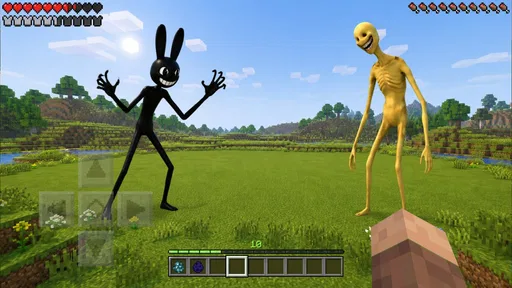
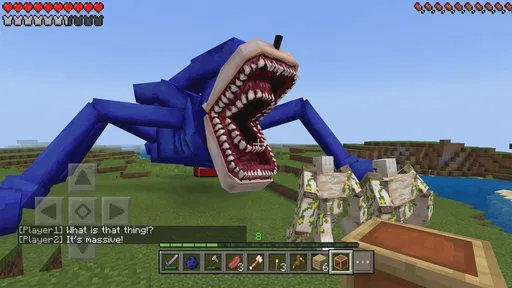
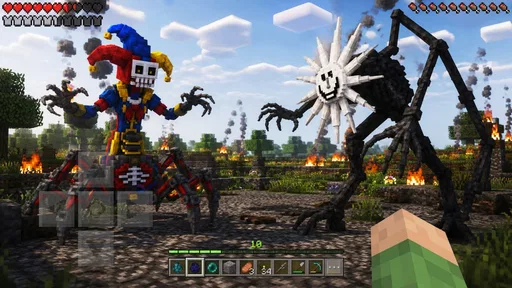
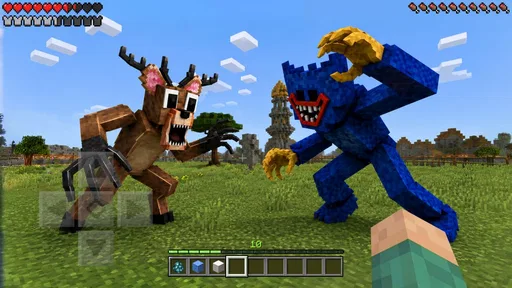
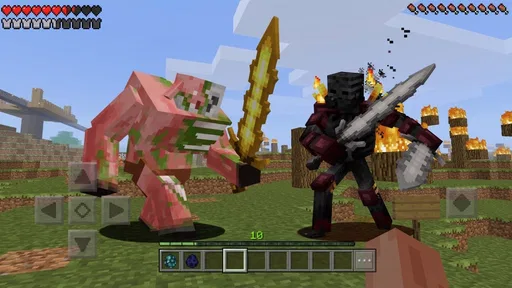
 Analysis by AppCompare
I like the idea behind Craft Battle: Block Wars: rather than handing you a finished arena and asking you only to fight, it puts building and combat in the same creative space. That makes it a simulation game with a different rhythm from a straightforward action title. You can think about what to make, then turn that creation into part of a battle. The appeal is the freedom to experiment; the trade-off is that players looking for a tightly directed campaign may find the open-ended premise less satisfying.
A practical way to approach the first session
I would start by treating the first play session as a small experiment, not a test of how quickly I can make something impressive. Pick one simple idea, give it a clear purpose, and notice whether you enjoy the move from creating to fighting. That tells you more about whether this particular blend suits you than spending your first session trying to build at maximum scale.
For example, a quick evening break could be enough to try one compact design and decide what you would change next time. If the battle gives your construction a satisfying payoff, you have a reason to return with another idea. If the preparation feels like a chore between you and the action, that is useful to learn early rather than after investing in a long project.
Building and fighting in the same sandbox
The game’s central loop is easy to understand even if you have not played a block-based sandbox before: make something, bring it into a battle, and see how your choices hold up. I find that combination more interesting than either activity on its own. Building gives you a reason to plan, while the prospect of combat gives your design a practical test instead of leaving it as decoration.
That structure also changes how I would approach a session. I would not try to create an elaborate masterpiece before learning how the battle side feels. A small, simple construction is a better first experiment: it lets you get a sense of the game’s building controls and the relationship between making things and fighting without investing a long stretch of time in one design.
The name, Craft Battle: Block Wars, fits the concept, but the more useful way to think of it is as a creative playground with a combat purpose. It is not automatically the best choice for someone who wants a conventional simulator with a detailed real-world setting. Its appeal rests on block-style creation and the chance to test what you make.
Why the build-first approach matters
In many battle games, preparation means selecting from a menu of fixed equipment or characters. Here, the premise gives preparation a more hands-on angle: your construction is part of the experience. That creates room for personal experiments, and it can make a win or a failure feel connected to your own decisions rather than just to a preset loadout.
Worth Reading Before You Choose

EA SPORTS FC Mobile 26 Is a Bigger Football Game, but It Takes Time

Flipboard Shows What News Apps Must Do Beyond the Feed

Switching to Android Auto Means Rethinking Your Driving Routine

Google Calendar Makes a Crowded Week Easier to Manage

Ludo King Makes the Most of the Minutes Between Plans

Baby Panda World Brings Quick Play to Modern Phones, but Its Game Library Feels Busy
A useful habit is to change one design choice at a time when testing an idea. If you rebuild everything between attempts, it becomes harder to judge what helped. Keeping a simple baseline and making one deliberate adjustment gives each battle more meaning, even if you are playing casually. This is the kind of small workflow that helps a sandbox feel purposeful rather than like an endless pile of options.
The same approach suits short play sessions. If I had only a few minutes, I would set a modest goal—try a compact build or test a single variation—rather than expect to complete a large project. That gives the session a clear endpoint and makes it easier to return later with another idea.
Who will enjoy the mix
I would recommend it most to players who enjoy alternating between making and testing. If you like creative games but lose interest when your creations have no practical role, the battle element gives your work a reason to exist. If you like combat but want more control over preparation than a standard match often allows, the building premise may be the hook.
It could also work well as a shared conversation starter among friends or family: one person can describe a design idea, while another suggests a different way to approach it. That does not require a formal team mode or any particular multiplayer feature; it is simply a natural way to enjoy a creative game together. For younger players, the Teen content rating is worth taking into account when deciding whether it is appropriate.
On the other hand, I would skip it if I wanted a carefully scripted story, realistic simulation, or a battle game where the main challenge is precise action with minimal preparation. The sandbox format puts more weight on experimentation. That freedom is a strength for curious players, but it can feel unfocused if you want the game to tell you exactly what to do next.
Keeping experiments useful
One trade-off in a build-and-battle game is that a result can be hard to interpret: an unsuccessful attempt might mean the design needs work, or simply that you have not yet found a useful way to test it. I would keep a brief mental note of the question behind each attempt—what did I want this change to accomplish?—so the next session has a starting point rather than a blank slate.
This also helps when you are playing in short bursts. Instead of reopening the game and wandering through possibilities, you can return with one specific adjustment in mind. It is a modest routine, but it turns trial and error into a more deliberate process and makes the creative side feel less overwhelming.
What the current release tells players
The current version is 1.1.04, and the game was released on August 16, 2026. Those facts establish the version and release point a player can use when deciding whether to install it; they do not, by themselves, show which mechanics changed between releases. I would avoid treating a version number as proof of a particular new feature or balance adjustment.
For someone already playing, a new version can matter if it improves a problem they have encountered, but that is something to assess through the actual experience after updating. My practical advice is to notice whether building, battle preparation, and the transition between the two feel smoother for you, rather than expecting a specific change just because the version number has advanced.
The game is made by Coup Coup LTD and is free to play. It has an average rating of 3.5 from around 2,000 ratings, alongside 13 written reviews, and has passed 1 million installs. I take those figures as signs that it has attracted a meaningful audience while still drawing mixed reactions. They are useful context, not a substitute for deciding whether this particular build-and-battle loop matches your taste.
It is listed for devices running Android 9 or later. If you are considering an older phone or tablet, checking the operating-system version before trying to install it is the straightforward first step. The free price lowers the barrier to trying the concept, but it does not make the game a good fit for everyone: time, device compatibility, and the kind of play you enjoy still matter.
Where it differs from familiar alternatives
Compared with a typical block-building sandbox, this game’s battle framing gives construction an immediate purpose. A purely creative alternative may be better if you want to build at your own pace without combat influencing what you make. Conversely, compared with a conventional combat game, the sandbox premise puts more emphasis on the choices you make before a fight, rather than making every moment about direct action.
That distinction is important if you are choosing between genres. The game is not simply a substitute for a building title or a battle title; it sits between them. I would choose it when the combination is the attraction. If I wanted deep, unconstrained architectural work, I would lean toward a builder designed around that alone. If I wanted a guided sequence of fights, I would choose a more structured action game.
There is also a trade-off in how open-ended games communicate progress. A clearly defined mission can tell you when you have succeeded, while a sandbox often asks you to set your own small goals. Here, I would make those goals concrete: test a build, change one element, or see whether a different approach works better. That self-direction can be satisfying, though it is not the same as a progression system with explicit milestones.
What may frustrate new and returning players
The biggest risk is a mismatch between expectation and pace. Someone drawn in by the word “battle” may expect immediate action, while the building premise suggests that preparation is part of the fun. Someone drawn in by crafting may expect the creative side to be the whole experience, only to find that the combat framing is central to the concept. I would approach it as a blend from the start, rather than judging it by only one half.
Another potential source of friction is the need to learn through trial and error. In a sandbox, a design that sounds clever in your head may not work as intended once it is tested. That is not necessarily a flaw, but it means players who dislike failed experiments may become impatient. Keeping early builds simple and changing one detail at a time makes the learning process less frustrating.
For returning players, the same discipline helps when comparing one session with another. Remember what you were trying to test and whether the result felt better, worse, or simply different. It is a more useful way to evaluate your own progress than making a complicated design without a clear question in mind. These are player-side habits, not claims about hidden mechanics; they make the game’s open premise easier to use.
What I would watch as the game develops
With version 1.1.04 as the current reference point, I would watch for clear, concrete improvements in the parts that define the experience: how approachable building feels, how naturally a creation leads into a battle, and whether the game gives players enough direction to keep experimenting. Those are the areas most likely to affect whether the central idea remains engaging over time.
For anyone already installed, it is worth judging updates by their effect on your own routine rather than by the version label alone. Does it make it easier to start a quick session? Does it help you understand what to try next? Does the build-and-test cycle feel more satisfying? Those questions are more grounded than assuming an update has introduced a specific system or feature.
For a new player, I would treat the first session as a test of fit. Try a modest creation, see whether the move from building to battle appeals to you, and decide whether you want to keep exploring. You do not need to commit to a long project to find out whether the core idea works for you. If the creative preparation is enjoyable, the game has a clear reason to stay installed; if it feels like a delay before the action you want, a more direct battle game will probably suit you better.
My overall view is cautiously positive. This is best for players who want their building choices to matter in a fight, not for people seeking a story-led simulation or a purely peaceful construction tool. The free entry point makes it easy to sample, and the mixed average rating is a reminder to keep expectations balanced. If you enjoy testing your own ideas and can tolerate some trial and error, it is worth a look; if you need a tightly guided experience, I would choose a more structured alternative.
Pros
- Easy-to-learn controls make it approachable for new players.
- Block-based arenas offer room for creative strategies.
- Short matches suit quick gaming sessions.
- A range of weapons keeps combat varied.
- The battle format can be fun with friends.
Cons
- Online matches depend on a stable internet connection.
- Combat may feel repetitive after extended play.
- Small screens can make aiming more challenging.
- Progression may take time for casual players.
- Performance can vary across older devices.
FAQs for Craft Battle: Block Wars
What is Craft Battle: Block Wars?
Craft Battle: Block Wars is a block-themed action game built around competitive battles. Players can enter matches, use weapons and other combat tools, and move through environments made from familiar cubed scenery. The exact modes, maps, and features may vary by version, so check the current store listing and in-game descriptions before downloading if you are looking for a particular style of match or specific content.
How do you play Craft Battle: Block Wars?
The main idea is to control your character, explore the arena, and fight opposing players or enemies, depending on the mode available. Touchscreen controls typically handle movement and combat actions, while the objective is set by the match type. New players should spend a little time learning the controls and checking the instructions, since aiming, movement, and combat can feel different across devices and game versions.
Can I play Craft Battle: Block Wars offline or do I need an internet connection?
Whether the game supports offline play depends on the features included in the version you install. Competitive matches and online multiplayer generally require a stable internet connection, and some menus or progression systems may also rely on online services. If offline access matters to you, review the store page and test the available modes before relying on the game without a connection; availability can change with updates.
Is Craft Battle: Block Wars free to download, and does it include in-app purchases or ads?
Check the Google Play or Apple App Store listing for the current price and details, because availability and monetization can differ by platform and region. A free download may still include advertisements, optional purchases, or other paid content. Before installing, review the listing’s in-app purchase information and your device’s purchase controls, especially if children will be playing or using the device.
Is Craft Battle: Block Wars suitable for children, and what should I check before downloading?
The game’s suitability depends on its combat content, online features, advertisements, and the age rating shown in your region. Before downloading, review the current store rating and privacy information, and check whether players can communicate or interact with strangers. Parents may also want to use device-level purchase and screen-time controls. Ratings and features can vary by platform, so confirm the details on the relevant store page.


